
RSS Feed ID • Feed Identifier • Syndication ID
One identity for every feed.
RSSid.com is a practical reference for naming, discovering, validating, and tracking RSS, Atom, JSON Feed, and podcast sources as URLs and platforms change.
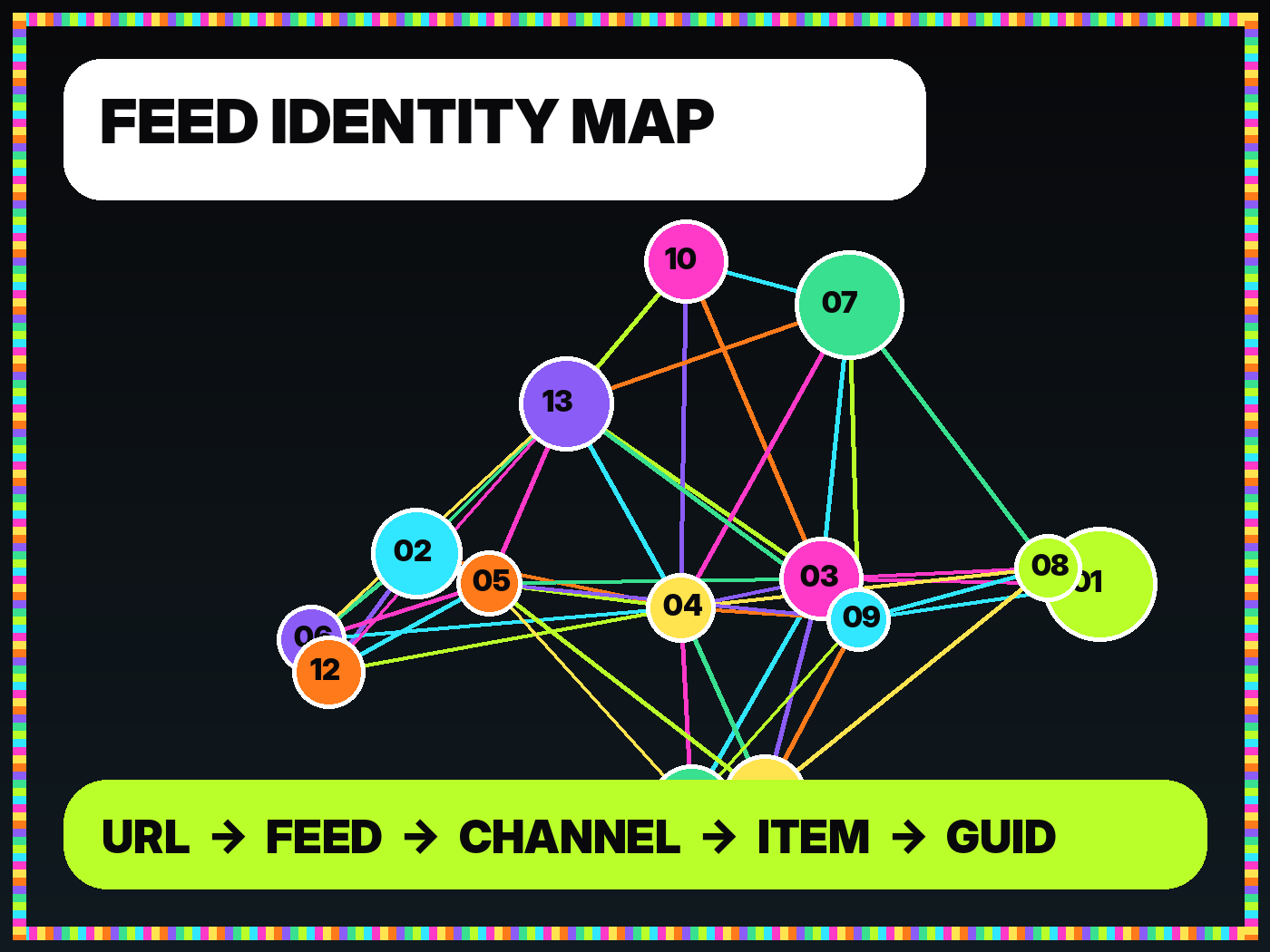
4identity layers
3feed formats
1canonical source
Identity stack
Separate the name from the location.
A reliable syndication system distinguishes the continuing publication, its current feed URL, its historic aliases, and the IDs of individual items.
↗
Canonical URL
Publish one preferred retrieval location and connect old addresses with durable redirects.
◎
Registry evidence
Preserve aliases, observations, validation history, and confidence behind every match.
Publisher workflow
Make feeds easy to find and hard to break.
Use a repeatable path from canonical URL selection to validation and long-term migration monitoring.
Choose the canonical feed URL
Prefer a durable HTTPS address under a domain the publisher can keep. Record vendor and legacy URLs as aliases.
Publish discovery metadata
Add accurate RSS, Atom, or JSON Feed alternate links in the HTML head and point visible subscription links to the same source.
Preserve item identity
Assign GUIDs and IDs once, store them with content, and test that edits or migrations never regenerate them.
Validate the public response
Check XML or JSON syntax, HTTP headers, dates, enclosures, redirects, and behavior in representative clients.
Log identity events
Record moves, merges, splits, and ownership assertions as evidence-rich events rather than silent edits.
Field guide
Start with the core reference pages.
Each guide focuses on a distinct search intent and links to deeper implementation articles.
01
Feed discovery
Autodiscovery link tags, canonical URLs, redirects, and resolver signals.
02
Feed validation
Syntax, identity, dates, namespaces, media enclosures, and release gates.
03
RSS API design
Resource models, resolution endpoints, provenance, security, and OpenAPI contracts.
Identity Log
Deep guides for feed operators.
Ten original articles cover the decisions that determine whether syndication remains continuous and deduplicated.
Podcast Feed IDs: Identity, Redirects, and Directory Migration
Protect show and episode identity when changing podcast hosts, feed URLs, enclosure storage, or directory settings.
Feed Fingerprints: Detecting Duplicate or Mirrored Syndication Sources
Build explainable fingerprints from normalized feed structure, item identity, and URL history without mistaking formatting changes for new publications.
Designing an RSS Feed Identity API and Registry
A practical architecture for resolving feed IDs, canonical URLs, aliases, metadata, evidence, and lifecycle events through a transparent API.
FAQ
Is a feed ID the same as a feed URL?
No. A URL tells software where to fetch a representation. A feed ID is a stable key for the logical publication and can remain unchanged when the retrieval URL moves.
Does every RSS feed have a channel GUID?
RSS 2.0 defines GUIDs for items, not a required immutable channel ID. Applications that need publication-level continuity should maintain their own feed identity record.
What should happen when a feed moves?
Preserve item IDs, deploy a permanent redirect from the old URL, update autodiscovery and directory records, and keep the old URL as a documented alias.
Is RSSid.com a live public registry?
This site is an educational reference and architecture guide. The registry pages describe a transparent model rather than claiming an operational resolver or ownership database.